


What are the different types of pigment spots? How to treat them? A pigment spot is a change in the normal color of the skin. It is generally flat brown, but can also be pinkish, red, or white. Brown spots are generally associated with aging, but it’s important to know that there are several types of pigment spots caused by different factors. It is very important to know the cause of the spot and what type of spot it is in order to find the right treatment.
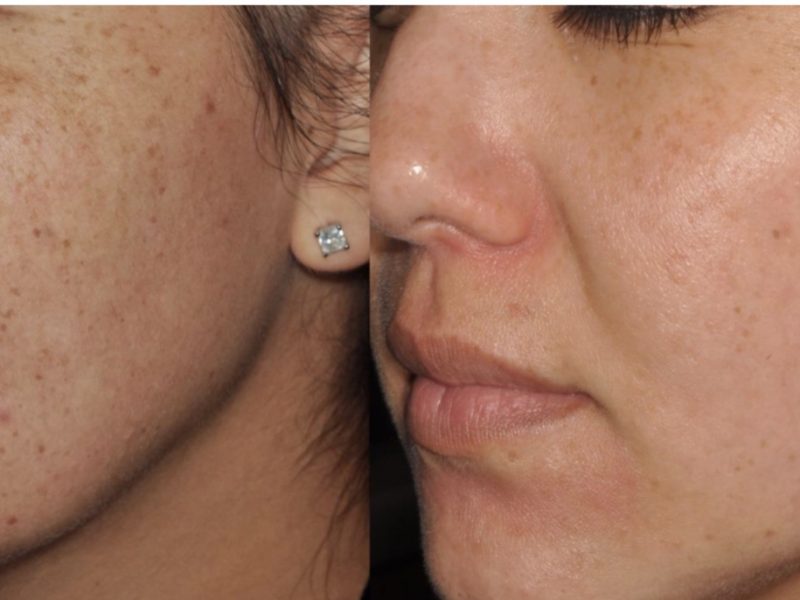
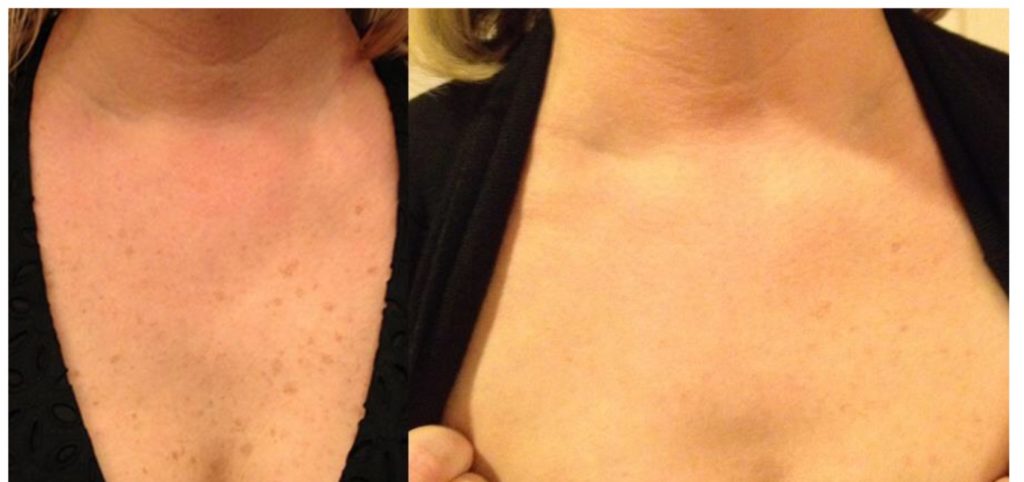
One thing is certain: pigment spots, regardless of the type, are directly linked to exposure to UV rays combined with various factors such as hormonal changes, photosensitizing medications, excessive exposure from unprotected sunbathing, the use of photosensitizing cosmetics, and, of course, skin aging.
At my clinics in Brossard and Dorval, I have specialized for 14 years in the treatment of pigment spots using various devices.
I can assure you that I see them in all colors! It is so common for spots to appear following the use of cosmetics such as retinol, essential oils, glycolic acids, salicylic acids, prescription oral medications, prescription creams for acne or dermatitis, etc.
It is very important to know that certain medications or cosmetics REQUIRE daytime sun protection at all times because they can be highly photosensitizing.
The cosmetician or pharmacist must inform you, but it is also your responsibility to inform yourself about what you are consuming.
Age spots With age, localized brown spots appear in areas that have been overexposed to the sun. In young skin, cells containing melanin are continually renewed every 28 days, so they don’t accumulate melanin.
When you’re young, everything goes well, but be careful because this is a ticking time bomb!
As we age, cell renewal slows down, resulting in an accumulation of melanin, responsible for pigmentation, and this is when pigment spots appear. The damage is done! Sun spots caused by hormonal changes (melasma) During pregnancy or menopause, women experience hormonal changes, and prolonged exposure to UV rays causes the appearance of pigment spots. These spots are often located on the cheeks, forehead, and around the mouth.
These spots are more mottled and are not defined like other pigment spots. It is important to use high-protection sunscreen and limit sun exposure because these spots are difficult to remove.
Spots caused by sun exposure when taking photosensitizing medication Some conditions require the use of photosensitizing medication, which can also cause pigment spots.
It is important to consult your pharmacist as soon as you start taking a new medication. Spots caused by sun exposure during skin inflammation Pigment scars can appear in cases of acne, insect bites, or cuts. When the skin is injured, avoid sun exposure because the pigment on scars is harder to remove.
Pigmentation spots caused by sun exposure when using photosensitizing cosmetics. Some cosmetics are completely unsuitable for the sun! It’s not that they’re bad for the skin; you just have to choose the right time of year to use them. I too often see cases of pigmentation spots that could easily be avoided.
The problem is that they’re sold over the counter or online, and people are very poorly informed! The situation is worse since people start shopping online without seeking professional advice: pigmentation spots, completely irritated faces, and premature aging caused by products unsuitable for certain skin types.
I understand that wrinkles are a priority, but pigmentation spots, excessive redness, and deep dehydration are not a beneficial way to treat the skin.
RETINOL, GLYCOLIC ACIDS, SALICYLIC ACIDS, SEVERAL ESSENTIAL OILS, ALCOHOLS, PERFUMES All of these ingredients should be avoided during the summer because without broad-spectrum sunscreen, they can cause dark spots. It’s also important to understand that these products can be irritating to the skin if used year-round.
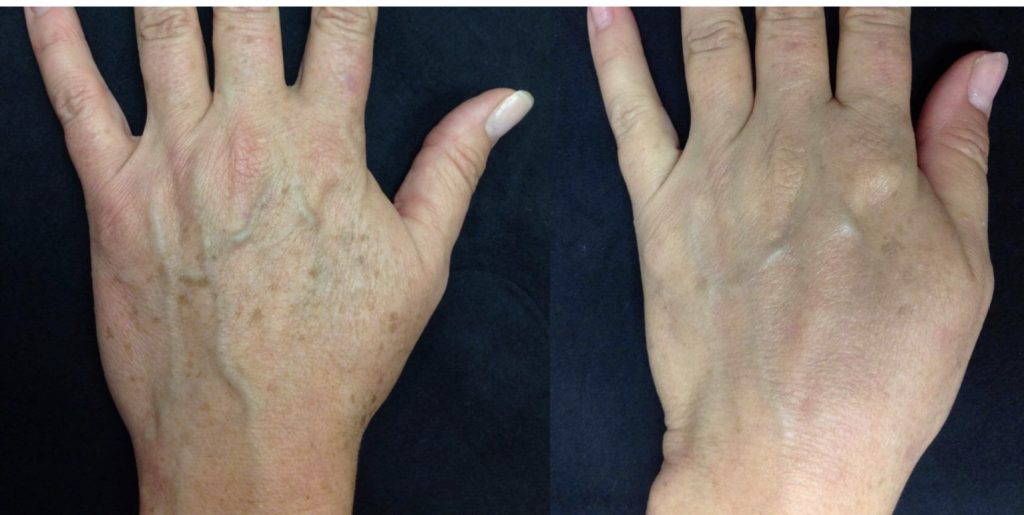
Pigmentation spots can be effectively treated with the medical-grade LUMÉCCA device from INMODE. This pulsed light device is highly effective in reducing and even eliminating most pigmentation spots. Generally, three visits are enough to achieve the desired results. If there are really many spots, up to five treatments may be necessary.
However, it’s important to know that everyone reacts differently, and some spots (pale brown ones) may be more difficult to remove. Dark spots disappear much more easily.
Hormonal spots such as melasma are not eliminated by IPL treatment; it’s better to opt for laser treatment. IPL treatments can even worsen melasma, so make sure you choose a professional who is familiar with the types of spots.
This is essential when choosing a treatment. SPOTS CAUSED BY SUN EXPOSURE ON ACNE OR SCARS ARE MORE DIFFICULT TO TREAT. IT IS VERY IMPORTANT TO USE SUNSCREEN ON RECENT SCARS.
